Jersey Shore

December 14th, 2009
Are you watching Jersey Shore? You should be. It’s perfect car-crash TV. Self-obsessed guidos and guidettes living together, all boozed up, horny and aggro. It’s entertaining in the same way that nature documentaries are entertaining. The pure, primal instinct of a pack of lions is always fascinating to watch because you never know when things are going to kick off. Now, imagine those lions were drunk — how much better would that be? Well, that’s what Jersey Shore is like. Drunk lions, covered in fake tan.

How good/bad is it? UNICO, “the largest Italian-American service organisation in the USA” has called for it to be canceled, describing it as “trash television” and saying the show “relies on crude stereotypes” and deliberately highlights the worst aspects of guido culture.

Trash television? Crude stereotypes? Why not just put out a press release, saying “Everyone, stop what you are doing and go watch this show now”?

During a promo for the rest of the season, they showed a clip of one of the girls, ‘Snooki’, getting a full-on punch to the face. From a big, muscly dude. Now, I’m totally against violence towards women, but HOLY FUCK LOOK AT THAT SHIT! HE BOPPED HER RIGHT ON HER STUPID FUCKING NOSE!

Idiots like me have been posting this clip all over the internet. It’s huge. It’s, as they say, “gone viral”. And so, MTV have decided to cut the scene with the punch out of the episode. They said that “seeing how the video footage has been taken out of context to not show the severity of this act or the resulting consequences, MTV has decided not to air Snooki being physically punched in next week’s episode.” I’m no expert, but if they’re that concerned about the context of the clip, I would have thought that the best way to give some context would be to show it in full? If I search for this clip now, I just get a load of user-uploaded videos taken from the the promo clip. If MTV don’t show the full clip, with context, then this is all there will ever be. There won’t ever be context.

Oh well. Punch or no punch, this show is still ridiculously entertaining.

Nicolas Cage, Goodwill Ambassador

December 14th, 2009

This is just bizarre, Nicolas Cage has been appointed Goodwill Ambassador for the UN Office on Drugs and Crime. My favourite quote from the press release:

Until today, justice has been a cause without a rebel. Now we have one,” said [UNODC Executive Director] Mr. Costa.

Cage has said that he will “use the performing arts as an engine for global justice and victim support”.

Now, let’s take a look at a couple of Nicolas Cage’s movies that are coming out in 2010.
Drive Angry — “A vengeful father chases after the men who killed his daughter”.
The Hungry Rabbit Jumps — “After his wife is assaulted, a husband enlists the services of a vigilante group to help him settle the score”

This is Nicolas Cage’s interpretation of “global justice”? What next? A right-wing homophobic actor with a history of drug use and sexual assault being elected governor of California?

Wait, what?

15 Pixels

December 12th, 2009

Call of Duty: Modern Warfare 2

December 2nd, 2009

When it comes to videogames, sequels tend to be less like the Godfather II and more like Jurassic Park II: The Lost World. Rather than making something that stands alone, that rips up the play-book and starts over from scratch and, as a result, creates something truly exceptional, you tend to just get more of the same, only slightly bigger and slightly sillier. So instead of “I know it was you Fredo. You broke my heart!”, you get Jeff Goldblum’s child lepping about on monkey-bars and drop-kicking a velociraptor out a window. (Not that I’m making a judgement-call here, both films have their times and places.)

It’s kind of hard to tell where Call of Duty: Modern Warfare 2 falls. On the one hand, it completely obliterates the first game in terms of the scope of the action and the improvements to the multiplayer are just a shade short of revolutionary. It’s probably the most beautifully rendered conflict I’ve seen in a videogame and every level manages to create its own unique sense of tension — from close, claustrophobic fighting through corridors and narrow streets, to giant open levels where you’re being attacked on all sides.

On the other hand, it really is dumb as a bag of hammers.

The narrative is all over the place. With the first game. developers Infinity Ward lifted heavily from all the big modern war movies — Black Hawk Down, Jarhead etc. I guess they must have played their cards early. With this new one, we get a couple of bits taken from Generation Kill (“Put the camera down, Spielberg” “CNN’s gonna pay loads for this footage!”) before they seem to say “fuck it, there’s nothing else we can steal” and go all Red Dawn — RED FUCKING DAWN — complete with Russians parachuting down into suburban America. I shit you not.

Now, I love Red Dawn as much as the next guy, but like I said, there’s a time and a place for everything. And the time for Red Dawn was thirty years ago, because now it’s just a dumb relic of a dumb time. Here’s the thing though: the writers make it very clear that they’re aware of how dumb this is. The level where you’re battling the Russians through a middle American neighbourhood is called “Wolverines!” — you know, an explicit reference to Red Dawn. It’s a knowing wink to the audience, like they’re saying “hey, we know this is stupid and ridiculous and over-the-top, but it’s all just a bit of fun, y’know?”

Which makes the now-infamous airport scene all the more curious.

(If you care about this game, don’t know what happens in this scene and don’t want to be ‘spoiled’, then stop reading now. The game came out almost a month ago, which is like ten years ago in internet-spoiler time, so don’t complain if I ruin the impact of this scene for you.)

Still reading? Good. If you don’t know what happens in this scene, then I’ll explain. You’re playing an American agent who has infiltrated a Russian terrorist group. The level opens on a crowded airport full of civilians. Your group walks in and starts shooting indiscriminately into the crowd. How you take it from here, is entirely up to you. You can get through the level without killing anyone, or you can do what I did, walk through the level spraying bullets at everything that moved and tossing grenades in every direction. (I don’t feel even slightly bad about this because I can tell the difference between real life and videogames). The level ends with the head of your group shooting you and leaving you to die, placing the blame on the Americans for the massacre.

Outside of the game, though, it’s a little more confused. Why did the developers feel the need to include this level? Most other games would have been content to tell this part of the story through dialogue or a cut-scene. “*ring ring* Hey bro, you’ll never believe it! The Russians killed a load of people and are blaming Americans and — wait, are those parachutes?” Instead, they actually had you walking through the scene with a gun in your hand. Even if Columbine and Virginia Tech had never happened, this would be an uncomfortable sell. As it happens, they’re impossible to escape throughout this scene. And a lot of people are asking why Infinity Ward chose to include it, especially when you spend every other part of the game mowing down various nameless, hard-to-distinguish ethnicities.

Now, here’s my take on the whole thing. I don’t think that anyone telling a story is obliged to cover all bases. They tell the story that suits them best. Within the context of the game, the airport level makes perfect sense. The Call of Duty: Modern Warfare games take place in an alternate near-future where Russian ultra-nationalists are in power, and this is just the excuse they need to send the country to war. Placing you in the thick of the action, then, draws you in. Even if you go through the level without firing a single shot, you feel complicit and spend the rest of the game trying to ‘fix’ your mistake.1

As to why the rest of the enemies in the game don’t get the same level of attention to their back-story or motives, well that’s just as simple. Why should it? From a narrative point of view, what purpose would it serve? Does the fact that your virtual enemy has a wife and child and perhaps dubious motivations change the fact that when he’s shooting at you, you’re going to pop his head like a melon? It’s similar to the complaints labeled at Black Hawk Down, that it was about dehumanizing the enemy. The story was about American soldiers and their point of view in this fight. The film split its time between five or six main soldiers and the story was told almost from their first-person point of view (well, as first-person as you can get in a movie without it being a gimmicky pile of ass. Right, Doom?). If the Somalis had a back-story, the US soldiers didn’t know it and so we, the audience, didn’t know it. Isn’t that why we invented the unreliable narrator?

Of course, this all changes in games like Modern Warfare 2 where you are the narrator, and you are narrating the story of the enemies. We will probably need a new paradigm for this kind of storytelling, but I’m not sure I’m going to figure it out in this (already long-winded) blog post. Don’t get me wrong, Modern Warfare 2 is a great game, and the only thing that has helped me kick my Modern Warfare 1 addiction. I just wish there had been some consistency throughout it. The airport level was something completely new to videogames and extremely well done. They laid the groundwork for an amazing story, but the Loony Tunes cartoon violence bullshit they followed it up with just felt a little flat.

  1. One thing I found interesting though is that despite the fact you go through suburban and central Washington, there’s not one American civilian to get caught in the crossfire. And in those levels where you’re supposed to be saving hostages, if even one of them dies, it’s game over and you have to try again []

Never Too Old

November 5th, 2009

When I turned 30, I spazzed right the fuck out. I felt really old. Actually, no — it was more than that. I didn’t feel old as much as I suddenly became very aware of my own mortality. I realised there were lots of things I hadn’t done, and probably would never get to do. Like a huge door had shut on a part of my life and I just had to adjust.

Now my wife is facing the same thing.

In the year’s head-start I’ve got on her, I’ve come to terms with the big three-oh. I keep pointing out that 40 is the new 30 (13,260,000,000 google results can’t be wrong). I also keep pointing out that, while she might feel like she’ll never achieve her goals of being a famous hip-hop artist like Princess Superstar, it’s never too late. Kelley Deal didn’t even pick up a guitar until she was 31. In fact, she was supposed to be in the band when she was 29, but couldn’t get time off work. Sound familiar?

But that’s nothing. Check this video out. It really gets going at 1:30

Fred Astaire was FOURTY SEVEN YEARS OLD when he pulled that shit off. I’m thirty and I got exhausted just watching it. But it’s more than just impressive that he was able to pull it off — I’d say that if he’d recorded that exact same routine when he was a younger man, it probably wouldn’t have been as good. Look at the aggression when he smacks that cane around — it takes a real curmudgeonly old fuck to swing a stick like that.

So maybe 50 is the new 20.

White Whine

November 4th, 2009

My current computer is exponentially more powerful than the one I had when I started using Unix, but thanks to software bloat and feature-creep, it still seems to take roughly the same length of time to compile software.

(This comes after hours of trying to get Mactex to play nicely with latex2rtf because my college only accepts assignment submissions in Word format and I’ll be fucked if I’m using that for long essays ever again.)

Normal programming will resume shortly.

In Defense of Hoarding

October 22nd, 2009

Over at Minimal Mac (a terrific site that everyone should read, even if you’re not a Mac user), they recently pointed to a metafilter comment about the dangers of coveting possessions. The commenter suggests that the best way to beat any hoarding impulses we might have is to simply adjust the way we look at things.

All of the computers on Ebay are mine. In fact, everything on Ebay is already mine. All of those things are just in long term storage that I pay nothing for. Storage is free.

The world is my museum, displaying my collections on loan. The James Savages of the world are merely curators.

It’s a lovely sentiment, and one I really wish I could get behind, except I’ve just got one little problem: Me. Or more specifically, people like me.

What do I mean by this?

I recently found a stash of old PlayStation games that I thought I’d lost. There are some real gems in there. PaRappa the Rapper, BeatMania, Final Fantasy VII. All great games. Will I ever play them again? Probably not. I’m having enough trouble keeping on top of new releases to ever really go back and play old games. So why don’t I get rid of them?

There were a finite number of copies of PaRappa the Rapper published. Taking into account losses, breakage and the effects of time, this number is constantly decreasing. Now, if I was to send my games off into the æther, there’s the strong possibility that they’d be picked up by someone like me: a pack-rat who can’t bear to let anything go. So not only would I be losing my own copy of PaRappa, itwould also mean there is one less copy to “take out of storage”. Eventually, there will be no copies of it left on eBay. Or at least, it would be so rare as to be only available at a completely unreasonable price.

The storage thing is a nice (if slightly smug and self-satisfied) analogy, but it just doesn’t work in the real world, because it assumes an infinite supply chain. Besides, I’d always prefer to be the curator, actually caring for these things, rather than a cold, distant absentee owner.

(My wife will probably beat the shit out of me for this post.)

Brain Dump — October 23rd

October 22nd, 2009

Here’s some stuff that’s been clogging up my starred list in Google Reader for too long.

When it comes to bonkers films, Russia is the new Japan:

Hosting your Windows 7 Torrenting Party

When you Marry” — they don’t write ‘em like that any more:

It is not uncommon for one or both parties to experience feelings of guilt or revulsion, to the mutual distress of both parties. For other couples who have anticipated great thrills in the first sex relations, there is sometimes disappointment — reality doesn’t live up to expectations

Monkey Island 2, in 3D:

Photobombing could be my new favourite thing on the internet.

Technology got you down? Squarepixelz is hosting a bunch of old tech documentaries. I love watching these — everyone’s so hopeful about the possibilities of technology.

X-Men Origins: Wolverine, in 30 seconds:

You know This American Life? “That show by those hipster know-it-alls who talk about how fascinating ordinary people are?” Well, here’s every episode of the This American Life TV show: Season 1 Season 2.

The Imaginarium of Doctor Parnassus

October 20th, 2009

Last night, through an amazing and unexpected string of good luck, I ended up at a special screening of Terry Gilliam’s new film, The Imaginarium of Doctor Parnassus presented by Gilliam himself.

I should probably point out that I’m a huge, huge fan of Gilliam. To the point that I’ve said that I want to be buried with my Criterion Collection edition of Brazil. So bear with me if I start to nerd out a bit.

I thought Imaginarium was terrific. After The Brothers Grimm and Tideland, which were both dark, heavy films, this is a return to the lightness of his earlier films. Don’t pay attention and you’d be forgiven for thinking this was a sequel to Time Bandits. Or maybe The Fisher King. Or maybe even The Adventures of Baron Munchausen. And hell, while I’m at it, there are a few shots there that made me think Gilliam has already cast Christopher Plummer in the lead of his currently-in-preproduction The Man Who Killed Don Quixote. This film shines a spotlight on the leitmotif running through all of his previous work: the idea that imagination and invention can break the spell of monotony cast by the drudgery of ordinary life.

At this point, I should probably try to summarise the plot. Isn’t that how these things work? But in Gilliam films, this is easier said than done. And to be honest, I think this is the kind of film that works best when you come into it blind, rather than with a bunch of preconceptions about what the story might be. Or don’t. Read everything you can, if you like. Just go and see it. But before you do, just let me say that Tom Waits is incredible as the Devil1, and Lily Cole is a surprisingly good actress. And the rewrites following the death of Heath Ledger work so well I’d bet that in 30 years, people will barely know they weren’t intentional. Like the malfunctioning shark in Jaws, sometime restrictions bring out the best in us.

There’s another aspect of Imaginarium that highlights this too: the special effects. Before CGI effects really took off, Gilliam was forced to limit himself using physical effects, which had a tremendous… well… physicality to them. Unbridled, his fantastical CGI dreamworlds look amazing and expansive, but they feel paper-thin. When people first enter the Imaginarium, they start in a pantomime forest, with cardboard trees which may have looked cheap and ridiculous, but they at least felt real and believable. As they moved further into the Imaginarium and hit the CGI-heavy landscapes, it made me wonder whether Gilliam made the right choice in prioritising epic verisimilitude over whimsy. Especially considering the film’s message of liberation through imagination.

One thing I should probably point out, which no-one has mentioned so far, is the similarity between this film and Angela Carter’s novel, The Infernal Desire Machines of Doctor Hoffman. Both are about unbridled imagination (and the potential perils thereof), but also, and perhaps more crucially, both are about identity and choice. I dunno, maybe I’m completely off-base with this one, but I could have sworn that one of the gravestones in Imaginarium had the name “Dr Hoffman” on it. Or maybe my eyes were just playing tricks on me.

(Update: Over on imaginariumofdrparnassus.com, Dave Warren, the film’s art director wrote in (in response to a link to this review — whoa) to say that the actual name on the tombstone was “Bob Hollow”. That solves that, then.)

The film opens theatrically at the end of the month and I’ll be keeping my eyes open during this scene when I go back to see it again. For me, every one of Gilliam’s films improve on repeat viewings. Gilliam told Mark Kermode that his preferred tagline for Tideland was “Tideland — It’s a different experience the second time!” I’d bet a tenner the same thing is true for The Imaginarium of Doctor Parnassus.

  1. Although I think this is slightly lazy, obvious casting, considering what a great job he did as Kneller in Wristcutters: A Love Story []

Nanowrimo

October 19th, 2009

We’re over halfway through October. You know what that means: it’s time for my annual resolution to actually participate in this year’s National Novel Writing Month (NaNoWriMo)! I mean, it’s not like I don’t have enough on my plate, what with college, radio work, design work, Italian lessons and my most thankless of jobs as house-husband. Why not try and write a novel too?

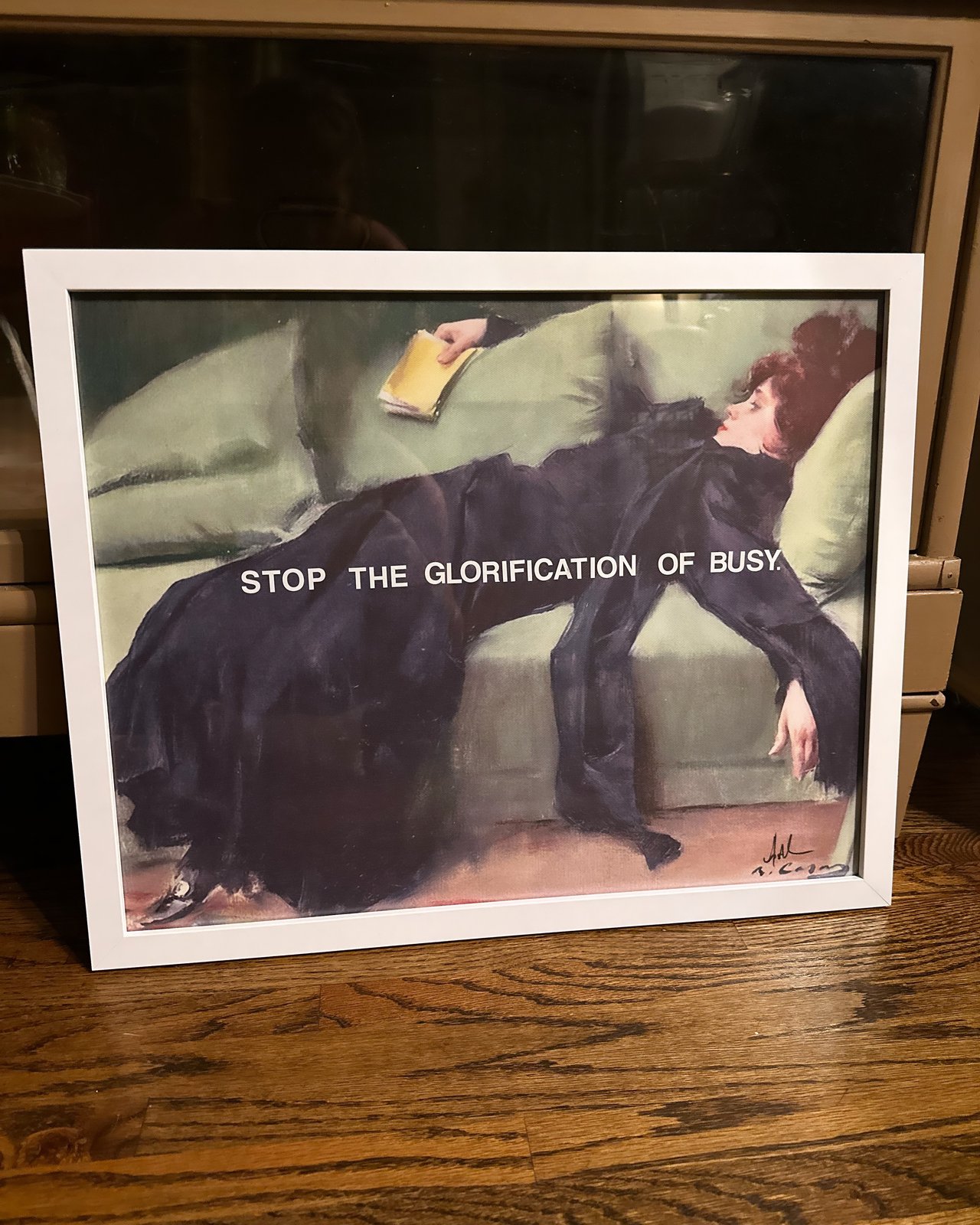
Part of what used to squash my plans in previous years is the fact that I had nothing else to do. And this is dangerous. There’s that old saying about “ask a busy man a favour.” The theory being that once you get the ball rolling, getting things done just becomes second nature. If you’d asked me to do you a favour before, I would have said “sure, no problem”, gone back to playing Xbox, and given you a half-hearted apology two months later when you ask me why I didn’t do what I said I would. I say “half-hearted” because, inside, I’d be thinking it was partly your own fault for asking me to do something in the first place.

Not this year.

The other thing that used to always catch me out was the lack of an initial idea. As romantic as it might be to go into this thing completely blind, just putting fingers to keyboard and seeing what happens across 50,000 words — automatic writing on a massive scale — I just don’t think this is the way I work best.

Again, not this year.

This year, I know exactly what story I want to tell. I’ve got an idea that I think I can stretch across an entire novel. It’s just a matter of getting it out. Quickly.

The only thing standing in my way (apart from college, radio work, design work, Italian lessons and my duties as house-husband) is Call of Duty: Modern Warfare 2, which comes out right in the middle of November. I’ve written before about how addicted I am to the first one (250+ hours) and I’m genuinely quite scared at what might happen when this new one comes out. Would Whitney Houston be appearing on X-Factor now if she knew that crack PLUS was going to be released in a few days? Hell no. She’d be off getting ready for her year-long crack vacation.

Who knows, maybe it’ll work and I’ll be able to pull it all off. I’ll just have to prioritise, hard. Ask a busy man a favour? Sure, right after I finish this game.